Shopifyでは限界を感じていませんか?従来型ソフトウェアよりも「連携前提のERP」が賢い選択である理由
Shopifyを活用する企業が、ライトウェイトERPによって受注管理の一元化、倉庫業務の自動化、そしてShip&Coとの連携による配送業務の効率化をどのように実現できるのかをご紹介します。システム連携によって手作業を削減し、出荷精度を向上させ、ECビジネスの持続的な成長を支える方法をご覧ください。
Shopifyは、D2Cブランド向けECプラットフォームとして世界的に高い支持を得ています。その理由は明確です。短期間でオンラインストアを立ち上げられ、商品管理も容易で、顧客にスムーズなオンラインショッピング体験を提供できます。さらに、豊富なアプリケーションエコシステムを活用することで、単なるECサイトを超えたビジネスの成長を支えることが可能です。
しかし、事業が成長するにつれて、企業が直面する課題はEC運営だけではなくなります。
受注は卸売パートナー、アフィリエイトプログラム、実店舗など複数の販売チャネルから入るようになります。倉庫では、実際に在庫として保有している商品と、すでに注文へ引き当てられている商品を区別する必要があります。配送情報は別のシステムで管理され、財務やオペレーション部門もそれぞれ異なるシステムを利用してレポートを作成しています。各システムはそれぞれの役割を十分に果たしている一方で、システム間の連携が不足しているため、データの分断、繰り返し発生する手作業、そして業務全体の可視性の低下が徐々に生じていきます。
こうした段階になると、多くの企業がERPの導入を検討し始めます。
従来型のERPは非常に幅広い機能を備えていますが、成長中のD2C企業にとって常に最適な選択肢とは限りません。導入には長い期間を要し、多額の初期投資が必要となるほか、既存の業務プロセスを大きく変更しなければならないケースも少なくありません。すでにShopifyなどのプラットフォームを活用している企業にとっては、既存システムをすべて置き換えることが、課題を解決するどころか、かえって運用を複雑化させる可能性があります。
そこで近年注目されているのが、私たちが「ライトウェイトERP(Lightweight ERP)」と呼ぶアプローチです。これは既存システムを置き換えるのではなく、それらを連携させる「Integration-First(連携を最優先に考える)」という考え方に基づいています。
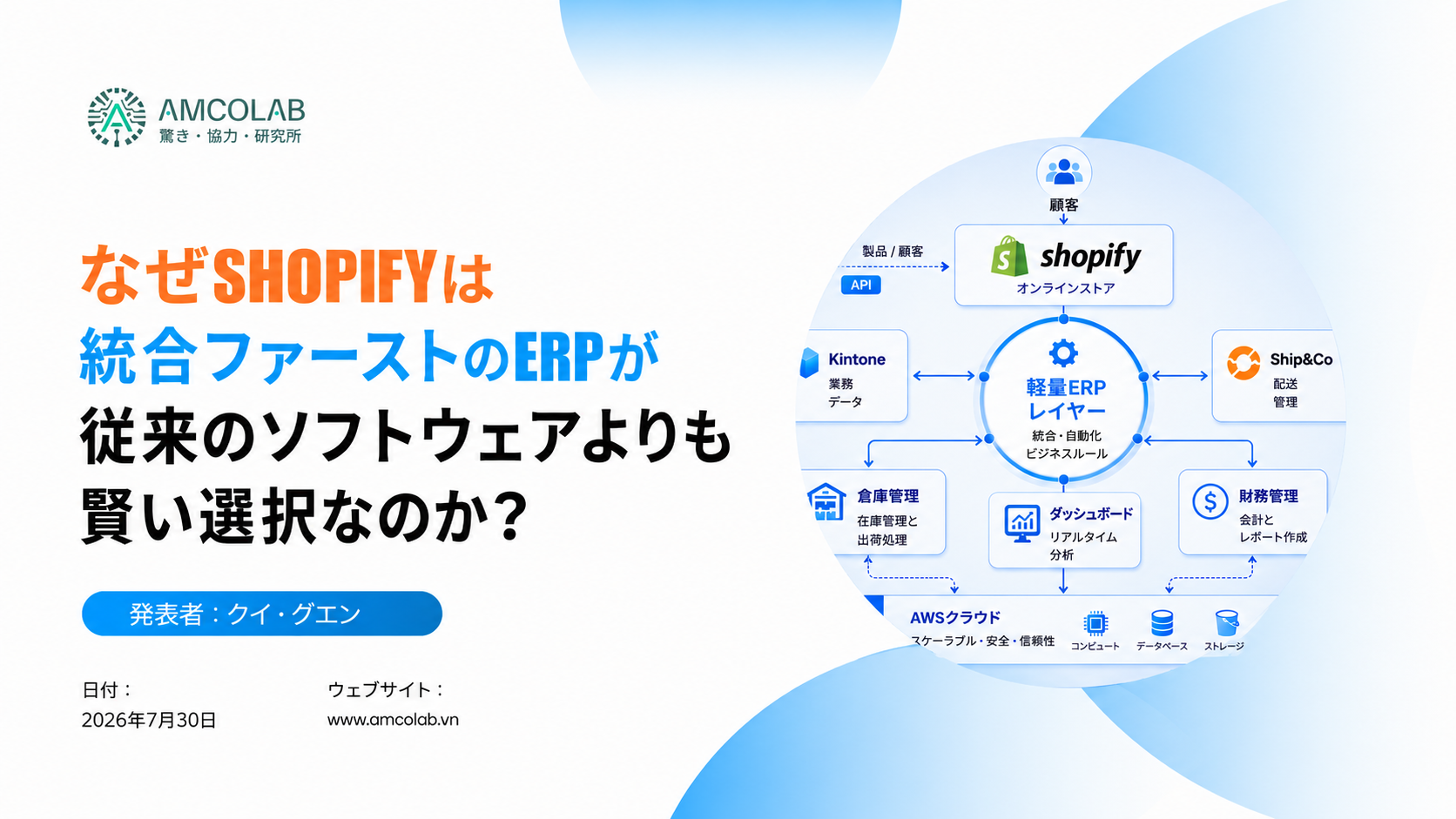
すべての業務を一つの巨大なシステムで管理するのではなく、ライトウェイトERPでは、各システム間でデータが自動的に連携される共通の業務基盤を構築します。Shopifyはオンライン販売を担い、Kintoneは業務データを管理し、Ship&Coは配送業務を担当します。そして、Ruby on Railsで構築されたカスタムミドルウェアが各システム間のデータ同期や業務プロセスの自動化を実現します。
Shopifyだけでは対応しきれなくなるとき
多くの企業では、業務の複雑化は一夜にして起こるものではありません。販売チャネルの増加や受注件数の拡大に伴い、徐々に進行していきます。
当初はシンプルだった受注処理も、やがて複数のシステムに分断された運用へと変化していきます。注文はさまざまなチャネルから入り、在庫は複数チャネル間で同期する必要があります。倉庫では手作業で作成したピッキングリストを利用し、カスタマーサポート担当者は一件の問い合わせに対応するだけでも複数のシステムを切り替えなければなりません。
これらの課題は、Shopifyそのものが原因ではありません。
問題の本質は、本来連携を前提として設計されていない複数のシステムに業務データが分散していることにあります。
業務全体を統合する中核システムが存在しない場合、在庫差異、データの重複、手作業による照合作業、出荷業務の遅延、さらには日々の業務状況を把握しにくいといった問題が発生しやすくなります。こうした課題は一つひとつは小さく見えても、事業規模が拡大するにつれて、大きな成長の障壁となっていきます。
Integration-First ERPの構築
ライトウェイトERPは、すでに導入されている業務システムを置き換えるのではなく、それらを相互に連携させることに重点を置いています。
一般的な構成では、Shopifyを顧客向けECプラットフォームとして利用し、Kintoneを業務データベース、Ship&Coを配送連携基盤として採用します。そして、Ruby on Railsで開発したカスタムミドルウェアが業務ルールを管理し、各システム間のデータ同期を行います。また、社内担当者はReactで構築された業務ダッシュボードを利用し、AWSが日々の業務を支える高い拡張性と信頼性を提供します。
このアーキテクチャにより、企業は既存のシステムを活用し続けながらも、受注、在庫、倉庫業務、物流に関する情報を一元管理できる「Single Source of Truth(信頼できる唯一のデータソース)」を構築できます。
以降では、このアーキテクチャが受注管理、在庫精度の向上、倉庫業務の効率化、配送業務の自動化、そして経営レポートの可視化をどのように実現するのか、さらにIntegration-Firstという考え方が、現代のD2C企業において従来型ERPよりも実践的な選択肢となりつつある理由について詳しくご紹介します。
事業成長の裏側に潜むオペレーション上の課題
多くのD2C企業では、業務上の課題は突然発生するものではなく、事業の成長とともに少しずつ増えていきます。
事業の立ち上げ当初は、Shopifyだけでも商品管理、受注管理、在庫管理を十分に行うことができます。少人数のオペレーションチームでも、いくつかの補助ツールを活用しながら出荷業務を管理でき、レポート作成もシンプルなスプレッドシートで対応可能です。
しかし、事業が拡大すると状況は大きく変わります。新たな販売チャネルが追加され、受注件数が増加し、倉庫では処理する出荷数も増えていきます。また、各部門は日々の業務を効率化するために、それぞれ専門的なソフトウェアを導入するようになります。
これらのツールは、それぞれ単独では特定の業務課題を解決してくれます。しかし全体として見ると、情報が複数のシステムに分散して保存されることで、業務環境は次第に断片化されてしまいます。
事業の成長とともに | よくある業務上の課題 |
販売チャネルの増加 | Shopify、B2B、アフィリエイト、実店舗など、複数の販売チャネルに受注データが分散している。 |
受注件数の増加 | 手作業による処理が多く、出荷業務の遅延やヒューマンエラーの原因となっている。 |
倉庫業務の拡大 | 引当済み在庫と実在庫の区別が難しく、在庫管理が複雑になっている。 |
業務システムの導入増加 | EC、物流、会計システム間でデータの整合性が保てない。 |
経営レポート・分析の高度化 | 複数のプラットフォームからデータを集約してレポートを作成するため、多くの時間と工数がかかる。 |
これらの課題は、Shopifyそのものが原因で発生することはほとんどありません。むしろ、本来連携することを前提として設計されていない複数のシステムが、それぞれ独立して運用されていることに起因しています。
例えば、Shopifyでは注文が確定していても、倉庫担当者にはその情報がすぐに反映されない場合があります。また、保留中の注文に引き当てられている在庫が、販売可能な在庫として表示されたままになってしまうこともあります。配送ラベルはあるシステムで作成されますが、追跡情報は別のシステムへ手作業で転記しなければなりません。こうした繰り返し発生する作業は、時間の経過とともに運用コストを増加させ、業務全体の可視性を低下させる要因となります。
多くの企業がERPの導入を検討し始めるのは、まさにこのような段階です。しかし、既存のシステムをすべて入れ替えることが、必ずしも最善の解決策とは限りません。
多くの場合、本当の課題はシステムの機能不足ではなく、「システム間の連携」にあります。
すでに十分に機能しているシステムを置き換えるのではなく、それらを統合するための中核となる連携レイヤーを構築することで解決できます。Shopifyはオンライン販売を継続して担当し、Kintoneは業務データベースとして機能し、Ship&Coは配送業務を管理します。そして、カスタム開発したミドルウェアが各システム間のデータを同期し、業務プロセスを自動化します。
このようなライトウェイトERPのアプローチにより、従来型ERPに伴う高額な導入コストや複雑なシステム移行を避けながら、事業の成長に合わせて柔軟に業務を拡張できるようになります。
複数の販売チャネルにまたがる受注管理の一元化
多くの成長中のD2Cブランドにとって、最初に直面する業務上のボトルネックの一つが受注管理です。
事業が拡大すると、注文はShopifyのオンラインストアだけでなく、B2B顧客、販売代理店、アフィリエイト施策、マーケットプレイス、さらにはオペレーション担当者が手入力する注文など、さまざまなチャネルから発生するようになります。それぞれのチャネルが独自の業務フローで運用されるため、日々の受注状況を正確かつ一元的に把握することが次第に難しくなります。
受注管理が一元化されていない環境では、担当者は複数のシステムを切り替えながら注文内容を確認し、在庫状況を照合し、出荷手配を進めなければなりません。このような運用は業務効率を低下させるだけでなく、重複処理や出荷遅延、顧客への案内内容の不一致といった問題を引き起こす原因にもなります。
ライトウェイトERPは、こうした課題を解決するために、注文の発生元に関係なく、すべての受注データを一元管理する「Single Source of Truth(信頼できる唯一のデータソース)」を構築します。
各販売チャネルを個別に管理するのではなく、すべての受注データを一つの業務プラットフォームへ自動的に同期します。これにより、倉庫担当者、カスタマーサポート、経理部門、経営層など、社内のすべての関係者が同じデータをリアルタイムで共有でき、一貫性のある業務運営を実現できます。
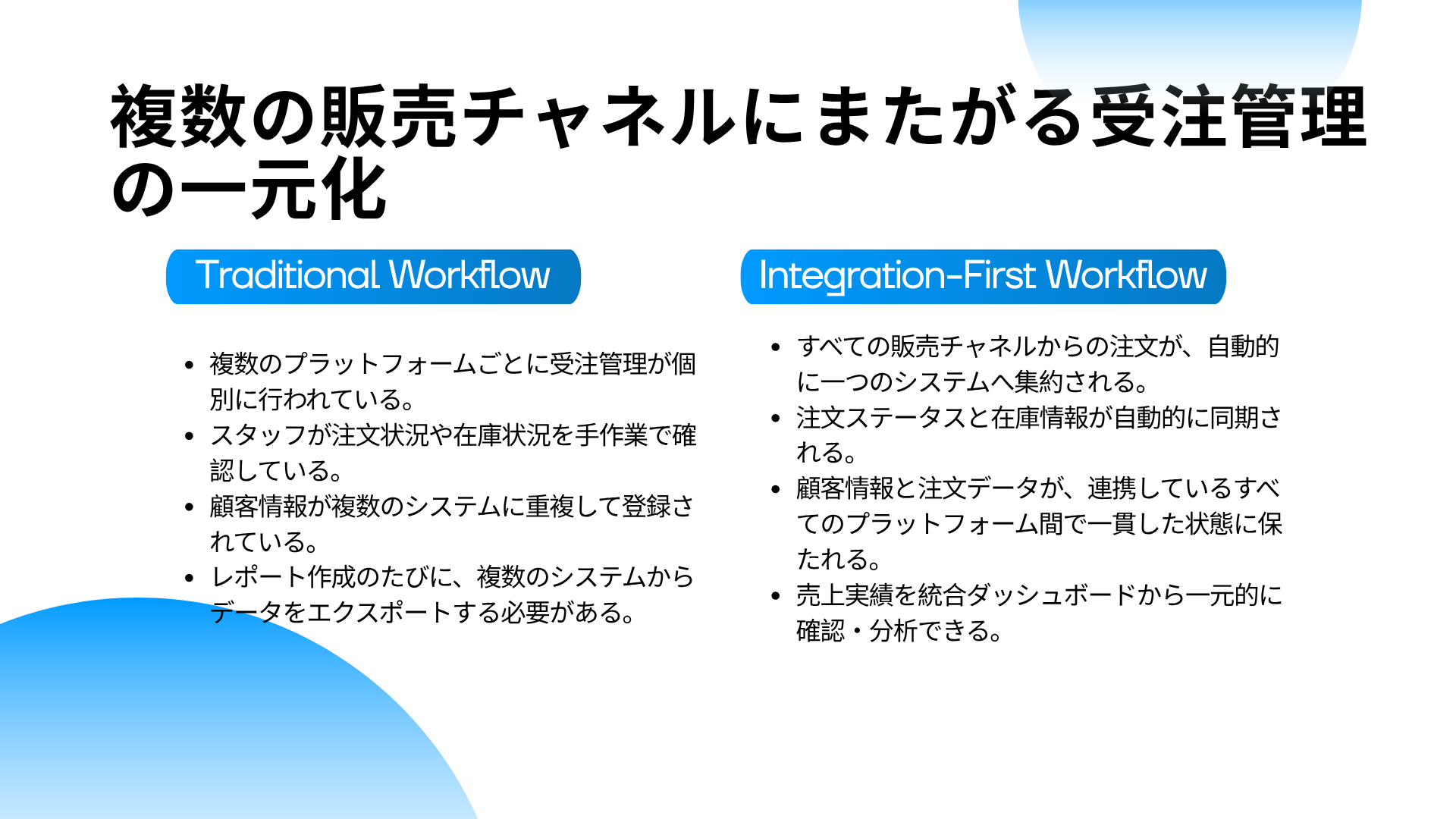
従来の業務フロー | Integration-Firstワークフロー |
複数のプラットフォームごとに受注が個別に管理されている | すべての販売チャネルからの受注が、一つのシステムへ自動的に集約される。 |
担当者が注文状況や在庫状況を手作業で確認している。 | 注文ステータスと在庫情報が自動的に同期される。 |
顧客情報が複数のシステムに重複して登録されている。 | 顧客情報と受注データが、連携するすべてのシステム間で一貫した状態に保たれる。 |
レポート作成のために、複数のシステムからデータをエクスポートする必要がある。 | 売上実績や業績を統合ダッシュボード上でリアルタイムに可視化・管理できる。 |
Shopifyを利用している企業では、通常、Shopifyが顧客向けのECプラットフォームとして機能し、ミドルウェアが受注データをKintoneなどの社内業務システムと自動的に同期します。さらに、APIを活用することで、他の販売チャネルも容易に連携でき、注文の発生元に関係なく、すべての受注を同じ業務フローで処理できるようになります。
AMCOLABでは、企業が現在利用しているシステムを活かしながら、手作業を最小限に抑えるためのシステム連携を設計・開発しています。既存のプラットフォームを置き換えるのではなく、EC、業務管理、倉庫、物流システムをシームレスにつなぐ統合環境を構築し、受注データが自動的に連携される仕組みを実現します。これにより、企業は受注件数の増加にも柔軟に対応しながら、より高い精度と効率で業務を運営できるようになります。
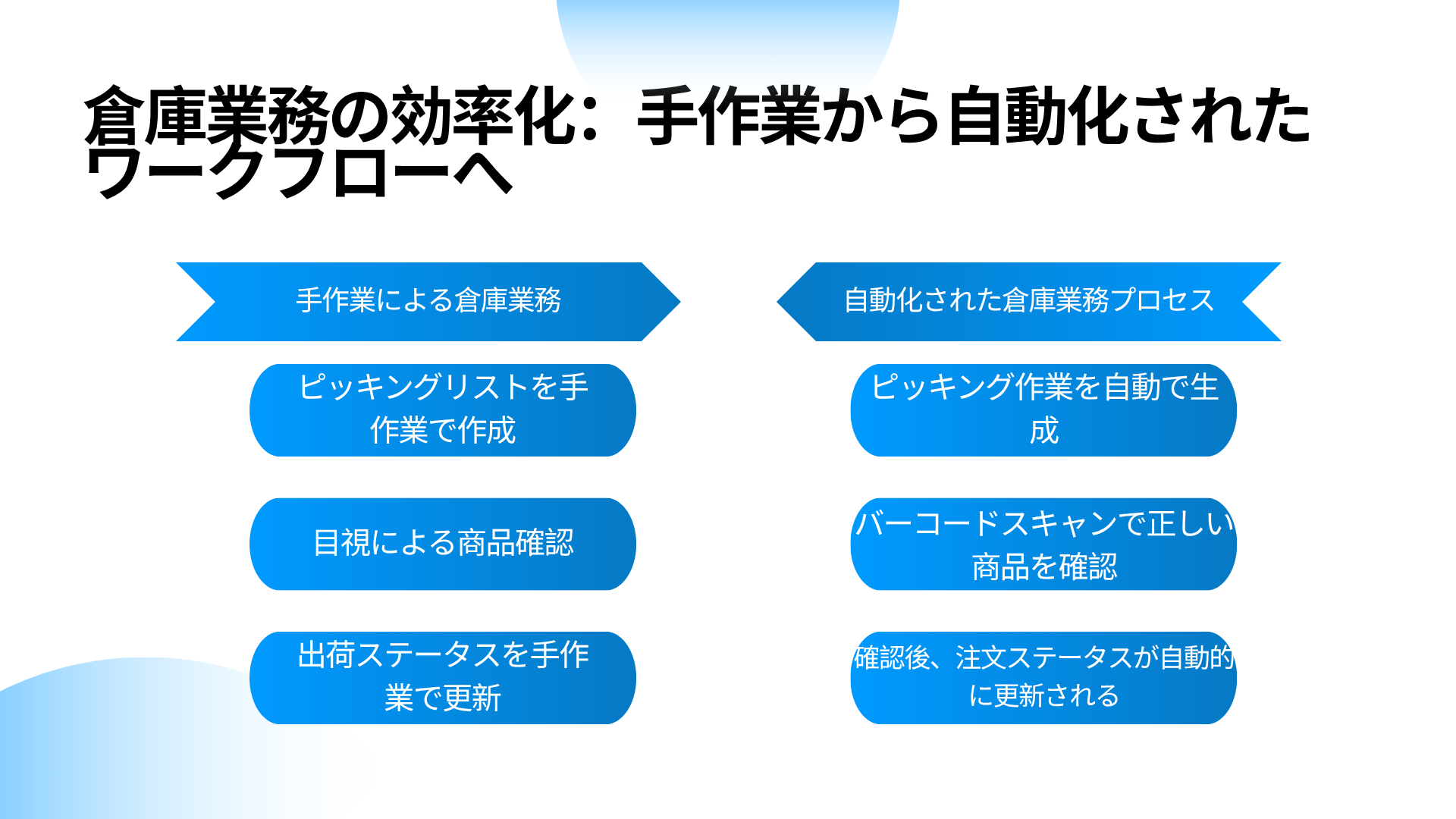
倉庫業務の効率化:手作業から自動化されたワークフローへ
受注件数が増加するにつれて、売上の拡大だけでなく、倉庫業務の効率化も事業成長を支える重要な要素となります。手作業で作成するピッキングリストや手書きのメモ、繰り返し行う商品確認は、小規模な運用では対応できても、事業規模の拡大とともに大きなボトルネックとなります。
ライトウェイトERPは、受注データに基づいてピッキングや梱包作業を自動的に生成し、倉庫業務を標準化します。担当者は明確な作業フローに沿って業務を進めることができ、出荷前にはバーコードスキャンによる商品確認を行うことで、出荷ミスを削減し、作業スピードを向上させることができます。
さらに、倉庫業務を在庫管理や受注管理システムと連携させることで、出荷状況をリアルタイムで把握できるようになります。同時に、これまで繰り返し行われていた管理業務や事務作業も削減され、倉庫全体の生産性向上につながります。
手作業による倉庫業務 | 自動化された倉庫業務 |
ピッキングリストを手作業で作成する。 | ピッキング作業が自動的に生成される。 |
商品を目視で確認する。 | バーコードスキャンで正しい商品を確認する。 |
出荷ステータスを手作業で更新する。 | 確認後、注文ステータスが自動的に更新される。 |
Ship&Co連携による配送業務の効率化
配送は受注処理における最後の工程ですが、オペレーション担当者にとって最も時間を要する業務の一つでもあります。多くの企業では、担当者が受注管理システムから配送システムへ顧客情報を手作業で転記し、配送ラベルを作成し、追跡番号を登録した後、さらにECプラットフォームへ戻って注文を「発送済み」と更新しています。これらの作業は一見すると単純ですが、受注件数が増えるにつれて業務効率を大きく低下させる要因となります。
Ship&CoをライトウェイトERPのアーキテクチャに統合することで、これらの作業の多くを自動化できます。注文のピッキングと梱包が完了すると、システムは自動的にShip&Coで配送情報を作成し、適切な配送ラベルを発行するとともに、追跡番号を取得します。その追跡情報はShopifyへ自動的に同期されるため、社内担当者だけでなく、顧客も最新の配送状況をすぐに確認できるようになります。
この自動化による効果は、単に1件あたりの作業時間を短縮するだけではありません。配送業務の自動化によって、繰り返し発生する手作業を削減し、データ入力ミスを防ぎ、注文確定から発送までのリードタイムを短縮できます。その結果、倉庫スタッフは事務作業ではなく出荷業務そのものに集中できるようになり、顧客も迅速な発送通知と、より透明性の高い配送体験を得られます。
オペレーションデータを意思決定につながるインサイトへ
事業が成長するにつれ、単にデータを保有しているだけでは十分ではなくなります。重要なのは、日々蓄積される業務データを、迅速かつ的確な意思決定につながる情報へと変換することです。
データを一元管理する仕組みがない場合、管理者は事業全体の状況を把握するために、複数のシステムからレポートを収集する多くの時間を費やさなければなりません。売上データはShopify、在庫情報は倉庫管理システム、配送状況は物流システム、業務指標はスプレッドシートと、それぞれ異なる場所に存在していることも珍しくありません。こうした情報を統合してレポートが完成した頃には、データがすでに古くなっているケースも少なくありません。
ライトウェイトERPでは、これらの業務データを単一のダッシュボードへ集約し、主要な業務指標をほぼリアルタイムで更新・可視化できます。
ダッシュボード機能 | ビジネス価値 |
売上概要 | 売上高、受注件数、販売チャネルごとの売上推移をリアルタイムで把握できる。 |
在庫状況 | 販売可能在庫、引当済み在庫、在庫不足アラートを一元的に管理できる。 |
倉庫業務の進捗 | ピッキング、梱包、出荷までの進捗状況をリアルタイムで確認できる。 |
配送パフォーマンス | 出荷状況、配送進捗、荷物の追跡情報を一つの画面で確認できる。 |
統合された業務ダッシュボードを活用することで、経営者や管理者は複数のシステムから情報を収集・照合する必要がなくなります。出荷業務のボトルネックを迅速に把握し、在庫リスクを監視し、日々の業務パフォーマンスを評価するとともに、常に最新のデータに基づいた意思決定を行えるようになります。
成長を続けるD2C企業にとって、このような可視性の向上は、業務の自動化と同じくらい重要な価値を持ちます。市場の需要変化に素早く対応し、日々のオペレーションを最適化するとともに、長期的な事業成長を支える拡張性の高い業務基盤を構築できます。
AMCOLABが提供するライトウェイトERPソリューション
企業ごとに業務プロセスは異なるため、すべての企業に適した単一のERPソリューションは存在しません。
AMCOLABでは、お客様が現在利用しているシステムを活かしながら、Integration-Firstの考え方に基づいたシステムを設計・開発しています。Shopify、Kintone、Ruby on Rails、React、AWS、そして各種サードパーティAPIを組み合わせることで、既存業務を大きく変更することなく、業務全体を一元化するソリューションを構築します。
受注管理、在庫管理、倉庫業務、配送業務の自動化など、どのような課題であっても、AMCOLABは事業の成長に合わせて柔軟に拡張できるアーキテクチャを提供します。
成長期にあるD2C企業にとって、ライトウェイトERPは、従来型ERPに伴う高額な導入コストや複雑なシステム構築を必要とすることなく、業務効率の向上、業務全体の可視化、そして長期的なビジネス成長を実現するための現実的な選択肢です。
よくあるご質問(FAQ)
ライトウェイトERPはShopifyや他の業務システムと連携できますか?
はい。ライトウェイトERPは、APIやミドルウェアを利用してShopifyと連携できるほか、Kintone、会計システム、CRM、物流システムなどの社内外の業務システムとも連携可能です。これにより、受注、在庫、顧客情報を自動的に同期し、シームレスな業務環境を実現できます。
倉庫業務の自動化は受注処理をどのように改善しますか?
倉庫業務の自動化では、手作業によるピッキングや梱包作業を標準化されたデジタルワークフローへ置き換えます。ピッキング作業は自動的に生成され、在庫情報はリアルタイムで更新されます。また、バーコードスキャンによる商品確認により、出荷精度が向上し、作業時間の短縮とヒューマンエラーの削減につながります。
Ship&CoをERPと連携するメリットは何ですか?
Ship&Coとの連携により、配送ラベルの作成、追跡番号の発行、出荷情報の更新を自動化できます。注文の発送準備が完了すると、配送情報はShopifyへ自動的に同期されるため、社内担当者と顧客の双方が、手作業なしで最新の配送状況を確認できます。
ライトウェイトERPは複数の販売チャネルに対応できますか?
もちろんです。ライトウェイトERPは、複数の販売チャネルからの受注を一つの業務プラットフォームへ統合するよう設計されています。Shopify、マーケットプレイス、B2B取引、販売代理店、手入力による注文など、受注元に関係なく、すべて同じ業務フローで処理されるため、業務効率と運用の可視性が向上します。
ライトウェイトERPは小規模または成長中のEC事業にも適していますか?
はい。ライトウェイトERPは、手作業による運用では対応が難しくなってきたものの、従来型ERPほど大規模なシステムを必要としない企業に最適です。業務の自動化、在庫管理の最適化、そして受注件数の増加に合わせた柔軟なスケールを実現し、事業の成長を効率的に支援します。