Offshore vs Onshore Development: Why Global Talent Access Matters More Than Cost
Explore the key differences between offshore and onshore development, and discover why modern businesses are focusing on global talent access, scalable engineering teams, and hybrid development models instead of cost alone.
Offshore vs Onshore Development: Why Access to Global Talent Matters More Than Cost
In today’s technology landscape, the discussion around offshore vs onshore development is often oversimplified as a cost comparison.
However, modern software development is no longer just about reducing expenses.
The real competitive advantage comes from how effectively companies can access, integrate, and scale global engineering talent.
As digital transformation accelerates worldwide, businesses that rely only on local hiring may face significant limitations in scalability, innovation, and speed.
The Challenge of Scaling Local Engineering Teams
Onshore development teams provide several traditional advantages:
- Easier communication
- Time zone alignment
- Stronger in-person collaboration
- Faster organizational integration
While these benefits remain valuable, companies are increasingly facing challenges when relying exclusively on local talent markets.
Common limitations include:
- Restricted access to experienced engineers
- Intense hiring competition
- Rising salary expectations
- Longer recruitment cycles
- Difficulty scaling engineering capacity quickly
In many mature markets, the shortage of high-quality software engineers has become a major operational bottleneck.
As a result, the question businesses should ask is no longer:
“Can we afford offshore development?”
The more important question today is:
“Can we afford to ignore global talent opportunities?”
Offshore Development Is More Than Cost Reduction
One of the biggest misconceptions about offshore development is that it exists purely to lower development costs.
In reality, the most successful companies use offshore development as a strategic capability model rather than a simple outsourcing tactic.
A well-structured offshore development strategy allows businesses to:
- Access a larger global talent pool
- Hire specialized technical expertise faster
- Scale development teams efficiently
- Increase engineering flexibility
- Accelerate product delivery
- Support long-term business growth
Cost optimization becomes a secondary benefit — not the primary reason.
The true value lies in expanding engineering capability beyond geographical limitations.
What Makes Offshore Development Successful
Offshore development does not succeed simply because teams are located in different countries.
Success depends on how the collaboration model is designed and integrated.
High-performing offshore teams are typically built around:
Clear Technical Ownership
Core product vision, architecture, and strategic decisions should remain clearly defined.
This ensures alignment between all stakeholders and development teams.
Integrated Workflows
Modern offshore teams should work within the same systems, processes, and collaboration environments as internal teams.
Successful offshore development is not based on isolated execution pipelines.
It is based on integration.
Continuous Communication
Frequent communication, transparent progress tracking, and shared accountability are critical.
The best offshore partnerships operate as unified engineering teams rather than separate external vendors.
Long-Term Collaboration
Sustainable offshore models focus on building stable engineering relationships, domain knowledge, and long-term technical consistency.
The Rise of Hybrid Engineering Models
Today, many high-performing technology companies are not choosing between offshore or onshore development.
Instead, they are intentionally building hybrid engineering structures.
In this model:
Onshore Teams Focus On
- Product ownership
- Business strategy
- System architecture
- Key technical decisions
- Stakeholder communication
Offshore Teams Focus On
- Scalable engineering execution
- Specialized technical capabilities
- Flexible development capacity
- Faster implementation cycles
This hybrid approach allows businesses to:
- Maintain strategic control
- Improve development speed
- Optimize operational efficiency
- Reduce scaling limitations
- Balance cost and quality effectively
Hybrid engineering models are becoming a core strategy for companies building modern digital products at scale.
Why Offshore Development Continues to Grow
Global software development continues to evolve rapidly.
Remote collaboration tools, cloud infrastructure, agile methodologies, and distributed engineering workflows have made offshore development significantly more efficient than in previous decades.
Businesses today are increasingly comfortable working with globally distributed teams because:
- Technology enables seamless collaboration
- Remote engineering practices are now standardized
- Talent shortages continue growing in many regions
- Product development cycles are becoming faster
- Scalability is now a competitive requirement
Companies that successfully leverage global talent are often able to innovate faster and scale more sustainably.
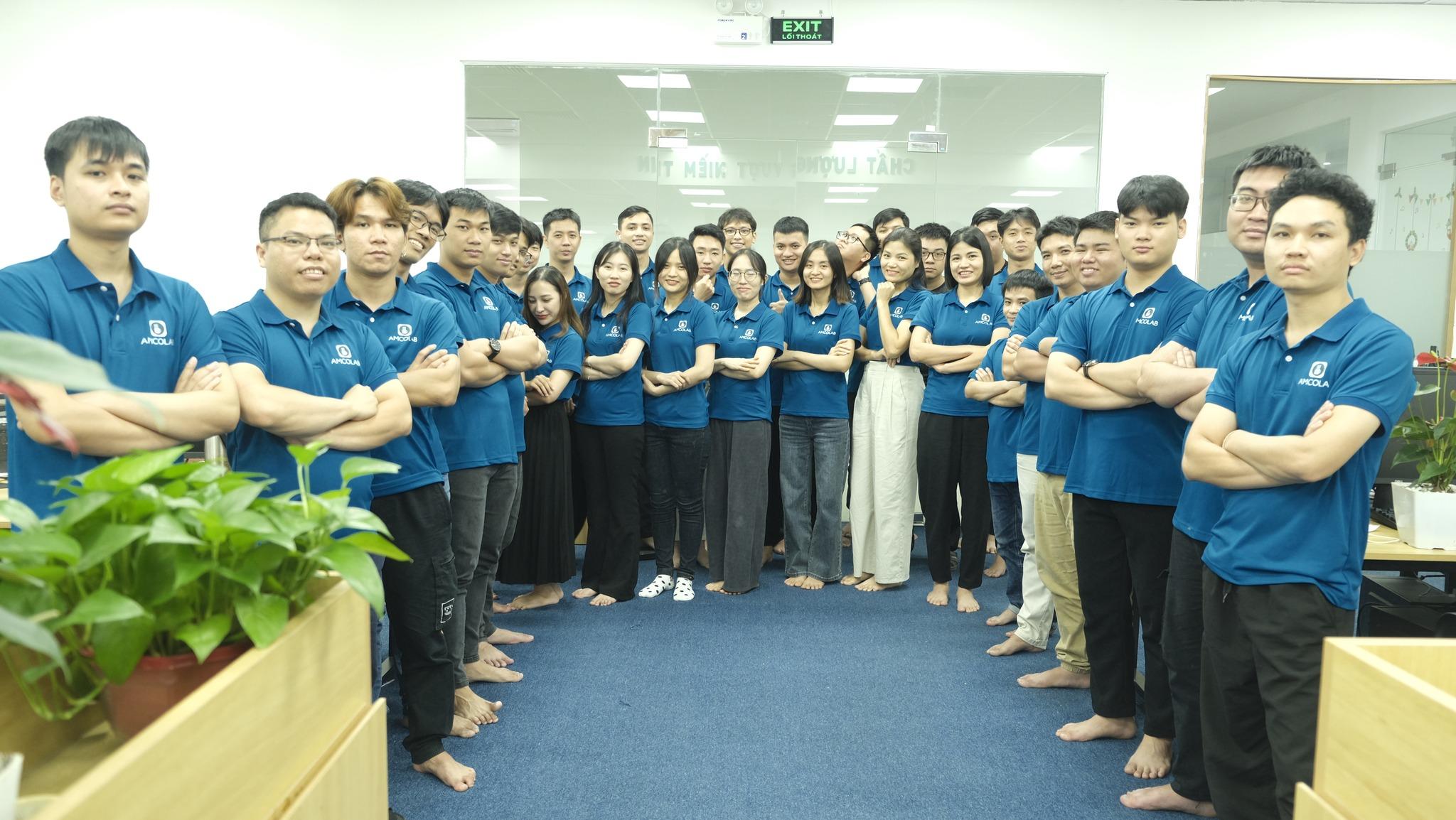
Offshore Development at AMCOLAB
At AMCOLAB, offshore development is not treated as a traditional vendor outsourcing model.
We approach offshore engineering as:
- An extension of your internal development team
- A scalable technology partnership
- A long-term collaboration model
- A strategy for accessing global engineering talent
Our focus is not only on delivering code.
We help businesses build efficient engineering systems that support scalability, product quality, and sustainable growth.
By combining technical expertise, integrated workflows, and transparent collaboration, we support startups and enterprises in building reliable digital products with confidence.
Conclusion
The offshore vs onshore discussion is no longer simply about reducing costs.
The real business advantage comes from building engineering organizations that can efficiently access and integrate global talent.
Companies that embrace hybrid development models gain the ability to:
- Scale faster
- Access specialized expertise
- Improve development flexibility
- Maintain product quality
- Optimize long-term operational efficiency
In today’s digital economy, competitive advantage is not determined by where your team is located.
It is determined by how effectively your organization structures, integrates, and leverages engineering talent worldwide.
Partner With AMCOLAB
AMCOLAB helps startups and enterprises build scalable software solutions through offshore development, web development, mobile applications, AI solutions, and dedicated engineering teams.
If you are looking for a reliable technology partner to scale your product development efficiently, our team is ready to support your business goals.
✉️ Email: info@amcolab.vn
📞 Tel: (+84) 968 703 531
🌐 Website: amcolab.vn