Multilingual Voice Ordering
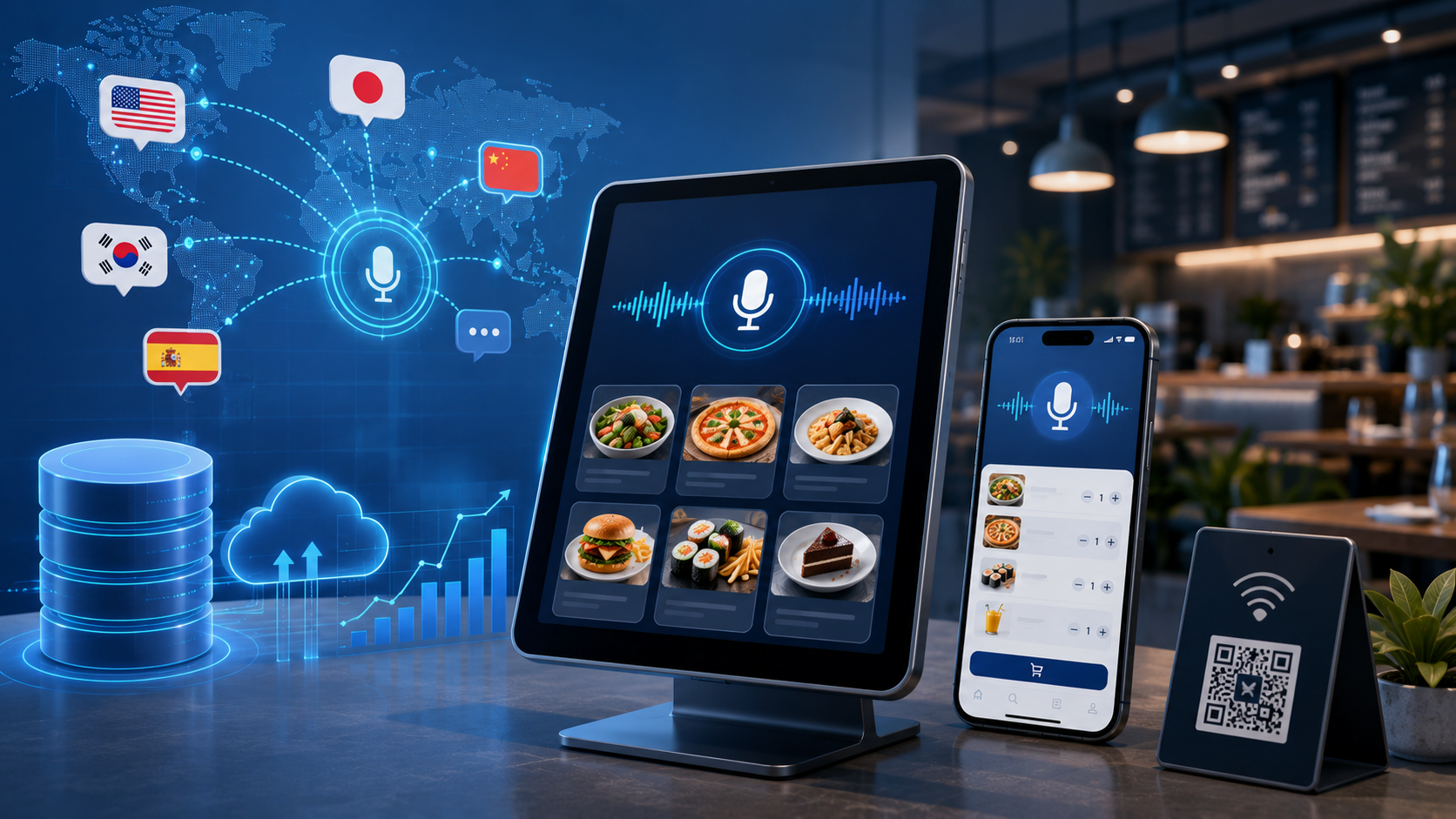
Customers can place orders naturally in Japanese, English, or Chinese through voice conversations. Responses are optimized for spoken interaction, producing short and natural replies suitable for text-to-speech.
A multilingual AI voice ordering platform that combines LLMs, structured conversation management, and voice technologies to deliver reliable restaurant ordering experiences through natural, real-time conversations.
Restaurants receive a wide range of customer requests—from menu recommendations and customizations to dietary questions and order confirmations. While conversational AI can improve customer experience, generic chatbot prompts are often not reliable enough for real restaurant operations, especially when conversations become multi-step or multilingual.
The client needed an AI assistant capable of understanding natural spoken requests, maintaining conversation context, recommending menu items, guiding customers through the ordering process, and delivering natural voice responses in Japanese, English, and Chinese.
The system also needed to prevent unreliable answers, apply business rules consistently, and escalate situations requiring human staff intervention.
AMCOLAB designed and developed a multilingual AI voice ordering assistant that combines LLM reasoning with deterministic business logic, enabling reliable, production-ready restaurant conversations.

Customers can place orders naturally in Japanese, English, or Chinese through voice conversations. Responses are optimized for spoken interaction, producing short and natural replies suitable for text-to-speech.

The assistant understands customer preferences and recommends suitable menu items while supporting toppings, customizations, quantity changes, dietary preferences, and follow-up requests throughout the ordering process.

Rather than relying solely on chat history, the system maintains explicit conversation state including selected items, previous recommendations, pending quantity confirmation, customization requests, and current ordering context. This allows customers to continue conversations naturally without repeating previous information.

Critical restaurant rules are handled outside the LLM through deterministic validation. The system validates menu availability, ingredient combinations, quantity confirmation, allergy-related requests, and situations requiring staff assistance before generating responses.

The LLM workflow was refined through regression testing and production feedback. The assistant correctly handles partial menu matches, low-sugar requests, unavailable ingredients, and avoids generating unsupported information regarding freshness, ingredient origin, or real-time stock availability.

Responses are generated through a dedicated response layer that maintains a consistent restaurant service tone while producing concise, natural speech suitable for real customer conversations across multiple languages.

Voice ordering supported in Japanese, English, and Chinese
Reliable multi-turn conversations throughout the ordering process
Improved recommendation accuracy using structured conversation state
Safer customer interactions through deterministic validation and staff escalation
Natural TTS-friendly responses optimized for restaurant service
Production-ready LLM workflow that separates AI reasoning from business logic
Designed conversational AI specifically for real restaurant ordering instead of generic chatbot interactions.
Combined prompt engineering, conversation state management, deterministic validation, and response generation into a maintainable architecture.
Delivered natural customer experiences across Japanese, English, and Chinese while preserving consistent service quality.
Business rules and escalation paths were integrated into the core workflow to reduce unreliable AI responses.
Let's discuss how conversational AI can improve customer service while maintaining reliable ordering workflows.
Schedule a Meeting Now